
Autonomous Food Delivery: The Future of Food Delivery, Gig Workers, and Hungry People
The Fresh Frontier of Driverless Delivery
A Bold Step in Phoenix
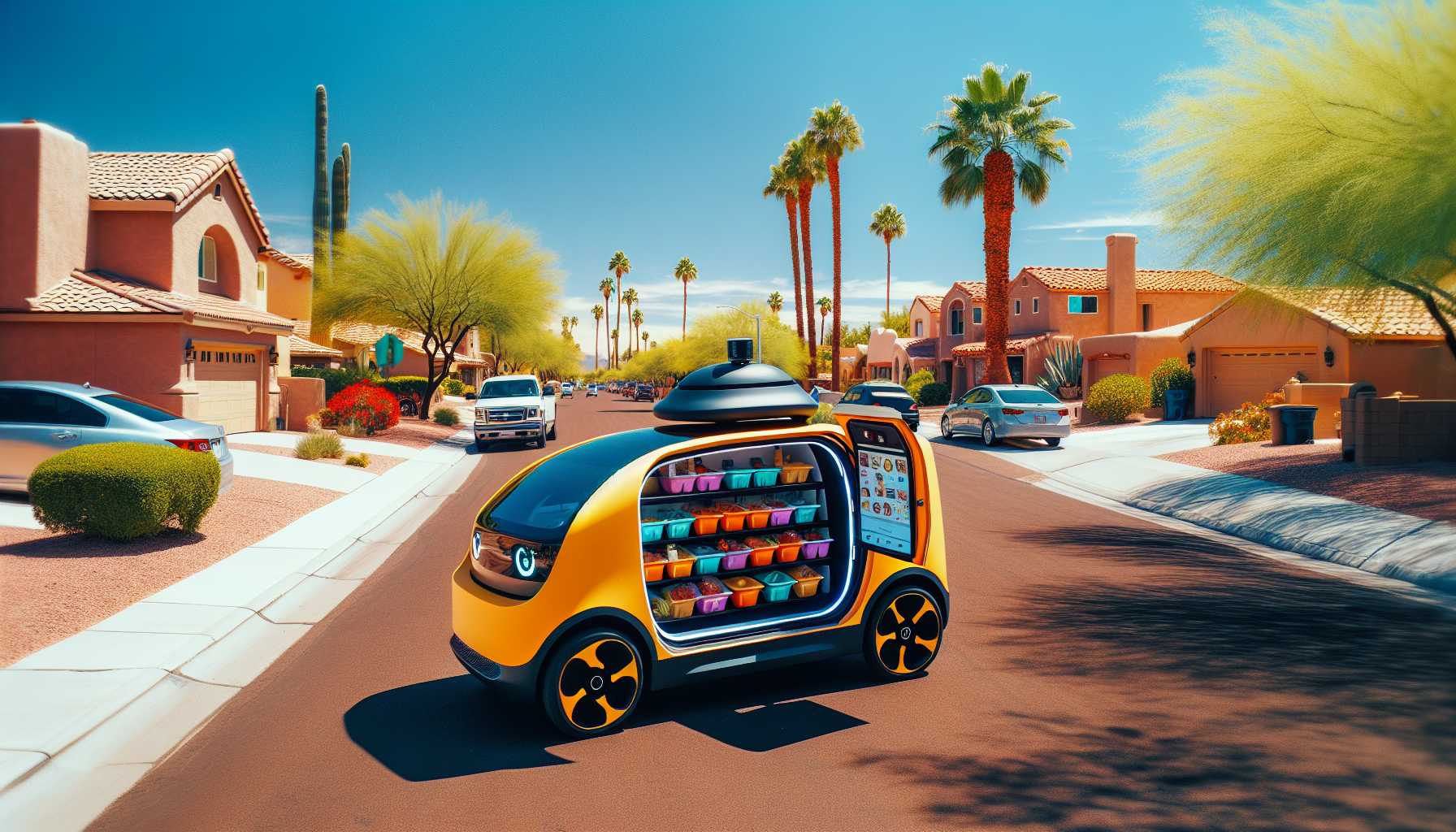
The streets of Phoenix are becoming test tracks for the latest collision between technology and tradition—autonomous food delivery. Uber Eats, the food delivery arm of the ride-hailing giant, has thrust forward with its spearhead operation in the Phoenix metropolitan area. Imagine this: you perch hungrily on your app, order a meal, and a self-driving car glides to your curb. No driver to greet, just you fetching your sustenance from the backseat of a robotic chariot. As a tech investor and aficionado, I see this as a monumental leap. It’s not just about removing the human factor from the equation; it’s about the prowess of machine learning, the advancement of sensor technology, and the massive data harvesting required to safely navigate our unpredictable roads. And for those craving a midnight snack without human interaction, it’s simply a dream come true.
The Expanding Appetite for Automation
Uber’s spokesperson, in a chat with CNBC, spilled the beans on the company’s plans to broaden the list of participating restaurants and extend their delivery domains. This isn’t Uber’s first rodeo with autonomous endeavors—past cities have been flirted with, but it’s with Alphabet’s Waymo that Uber plans to go steady. We’ve known the drill with Uber: ease and flexibility hailed as the beacons of gig economy. But now, if you’re steering the wheel in the delivery industry, this might be the time to start questioning the longevity of your career path. The writing’s been on the wall, with Uber’s eyes always on the autonomous prize.
Will Robots Cook Up an Employment-Free Monopoly?
From a boardroom perspective, it’s salivation station. No more union woes, wage wars, or the tangles of employment law—just a fleet of driverless cars efficiently shuttling pad thai and pizzas to customers. But should the thought of an employment-free monopoly unsettle us? As someone immersed in tech, I see the double-edged sword: innovation that propels society forward, yet casts a shadow on job security. Think about it. The very future of retail, manufacturing, and service sectors hinges on these breakthroughs. And it’s not only delivery drivers who should be wary. Chefs, waitstaff, maybe even your local barista could soon feel the tremors of technology’s relentless march.
A New Spin on Automation
The laughter of the internet still echoes in my ears from when it became privy to one of tech’s open secrets: “automation” often meant underpaid humans from across the globe massaging data into shape. It was, in a sense, a human-powered façade waiting to shed its skin. But as my colleagues in AI development insist, the aim is for genuine self-reliance—software that learns and adapts without the hand-holding. The objective is clear—business efficiency at the edge of innovation. Yet, here’s the kicker: every technological leap demands a new kind of workforce. The programmers, engineers, and AI ethicists are the new blue-collar workers, building and maintaining the digital infrastructure upon which our automated future depends.
Peering Into the Future
What Does This Mean for the Gig Economy?
Let’s not skirt around the issue: the gig economy’s blueprint was never etched in stone. It was a temporal stage, a stepping stone, and its actors—delivery drivers, couriers, ride-hail pilots—were always auditioning for a role we knew would eventually be cut. This latest move by Uber and Waymo isn’t just a plot twist; it’s a possible plot conclusion for many gig workers aiming to continue in the delivery space. I’ve seen the startup pitches, heard the investor calls—they all chart the same course toward a driverless horizon.
Human Touch in a Touch-free World
But, here’s my curveball thought: even in a world where your quinoa bowl arrives via robot, we will always crave the human touch in our lives. This isn’t about resisting change; it’s about embracing it wisely. We’re talking about customer service, empathy, the creativity in a chef’s special touch—in every industry threatened by automation, there lies an opportunity for differentiation through human skill and interaction. The deciding factor for many businesses might not be the cost saved by cutting humans out, but the value added by keeping them in. So, take heart—there will likely always be space for the personal, the artisan, and yes, the small businesses that stand out because they value such things.
The Ultimate Takeaway
For some, the fusion of Uber’s expansive reach with Waymo’s technical wizardry is a storyline rife with job insecurity. For others, it’s a clarion call of opportunity—a chance to jump onto the burgeoning fields of robotics, AI, and mechanized logistics. Will we see a day when all service industries have gone the way of the self-driving car? Unlikely, or at least not in the wholly dystopian sense some might paint. As a tech investor and enthusiast, my final take is this: innovation breeds innovation. Wise investment in technology is as much about fostering new industries as it is about revolutionizing old ones. Education, re-skilling, and a forward-looking mindset are key—a focus on the jobs of tomorrow, even as we navigate the changing landscape of today. Whether it’s delight or dismay, the era of autonomous food delivery is upon us. It’s time to think beyond the drone of engines and the clatter of dishes, and imagine a future rich with potential, if we dare to drive it. Now, let’s fuel up for the journey ahead, and perhaps, ponder over a meal delivered not by hand, but by the wheels of progress.